Our story
Two problems hold heat pumps back: controls that fight, and frost that stops the heat.
We set out to fix both, starting on a workbench in a Michigan garage.
Problem 1 · Controls
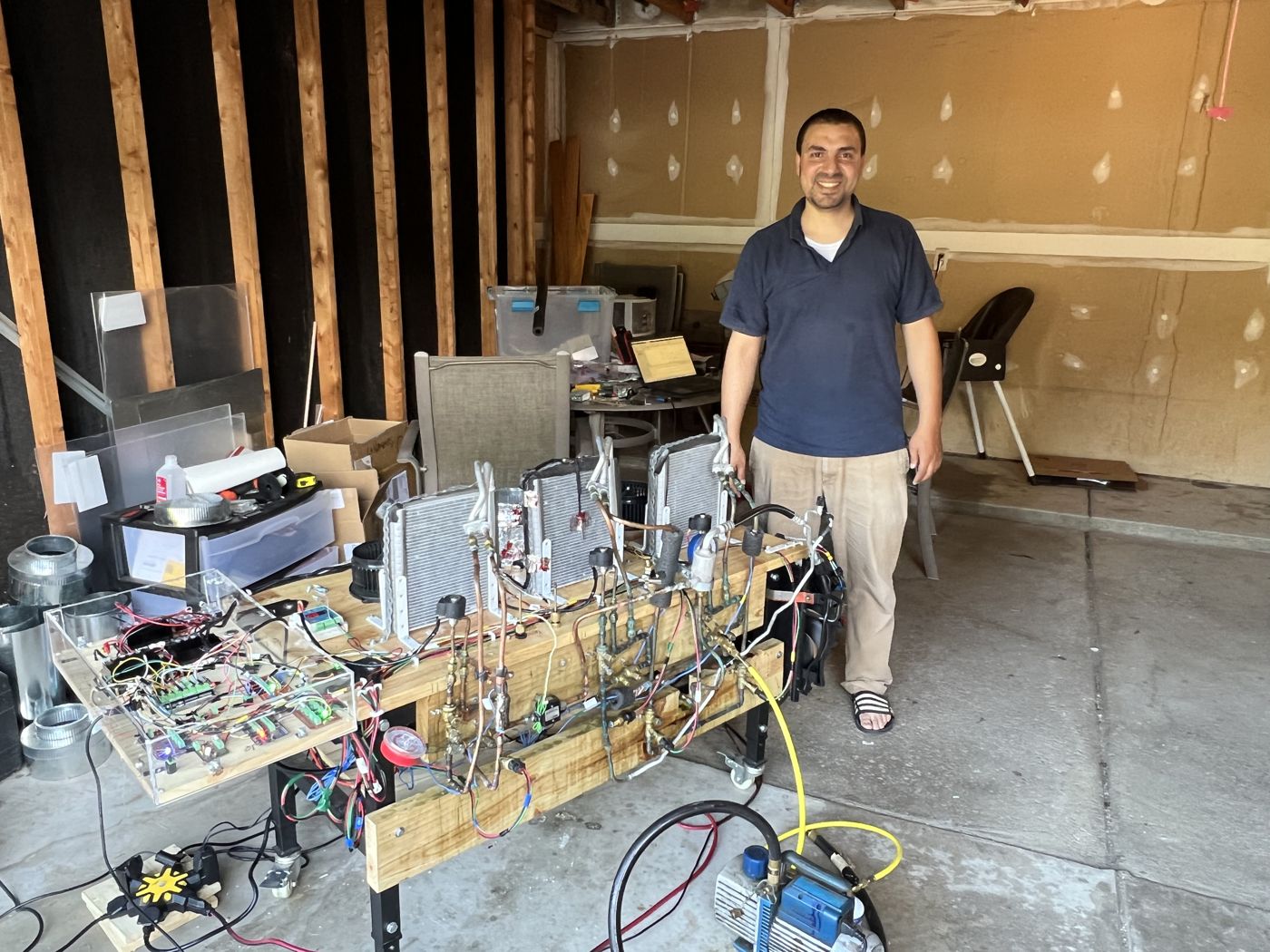
It began with a bare workbench.
Ahmed had spent years modeling how fluids and heat move, and designing controllers for machines that have to get it right the first time. Heating and cooling equipment kept bothering him. Each part is tuned on its own loop, the loops fight each other, and the machine pays for it in energy.
So he bought a workbench and a box of parts. Mechanics helped cut and fit the steel frame and mount the condenser, fans, coils and blowers. The idea was simple to say and hard to do: one controller, running a physics model of the whole refrigerant cycle, setting everything together.
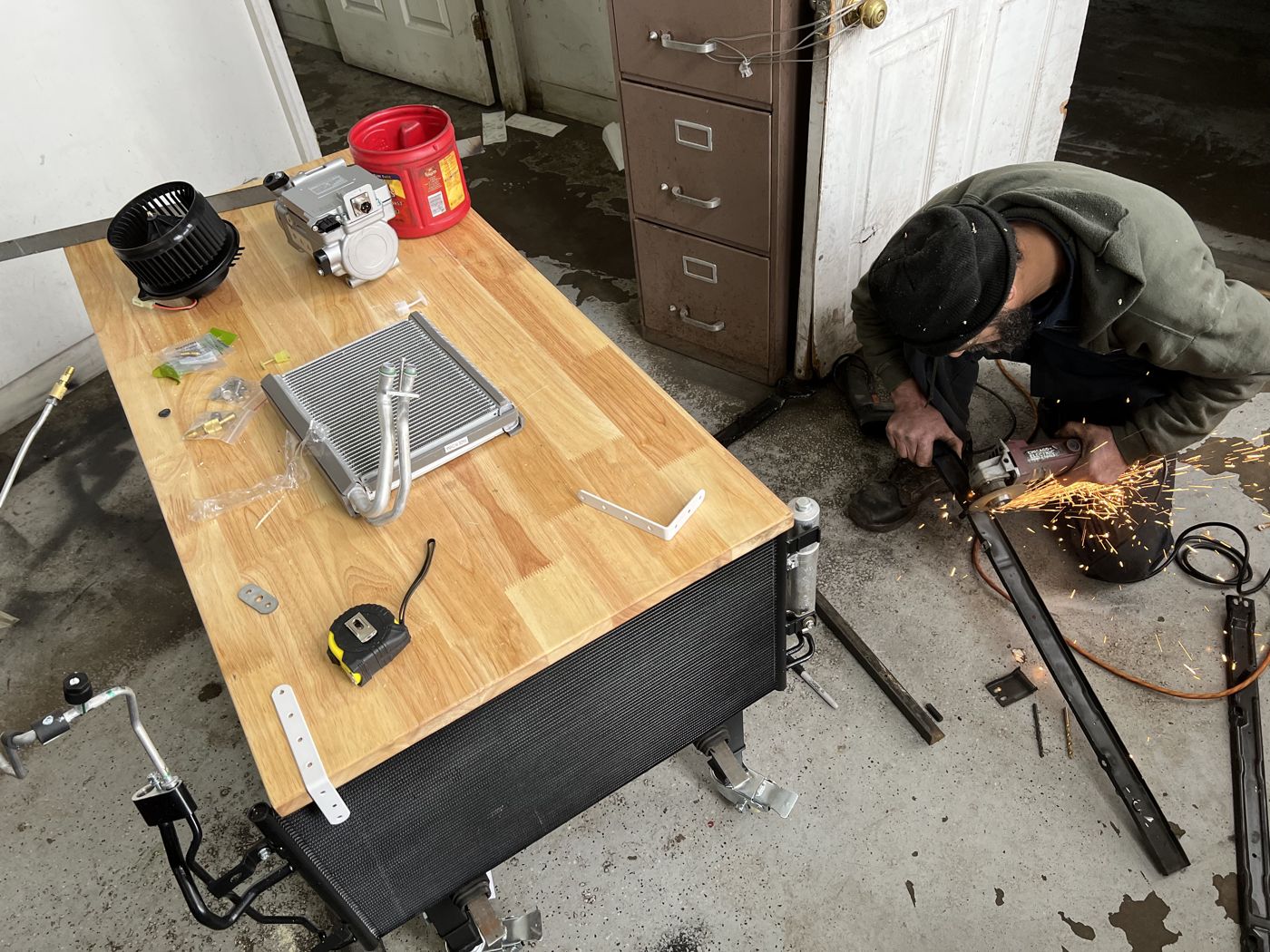
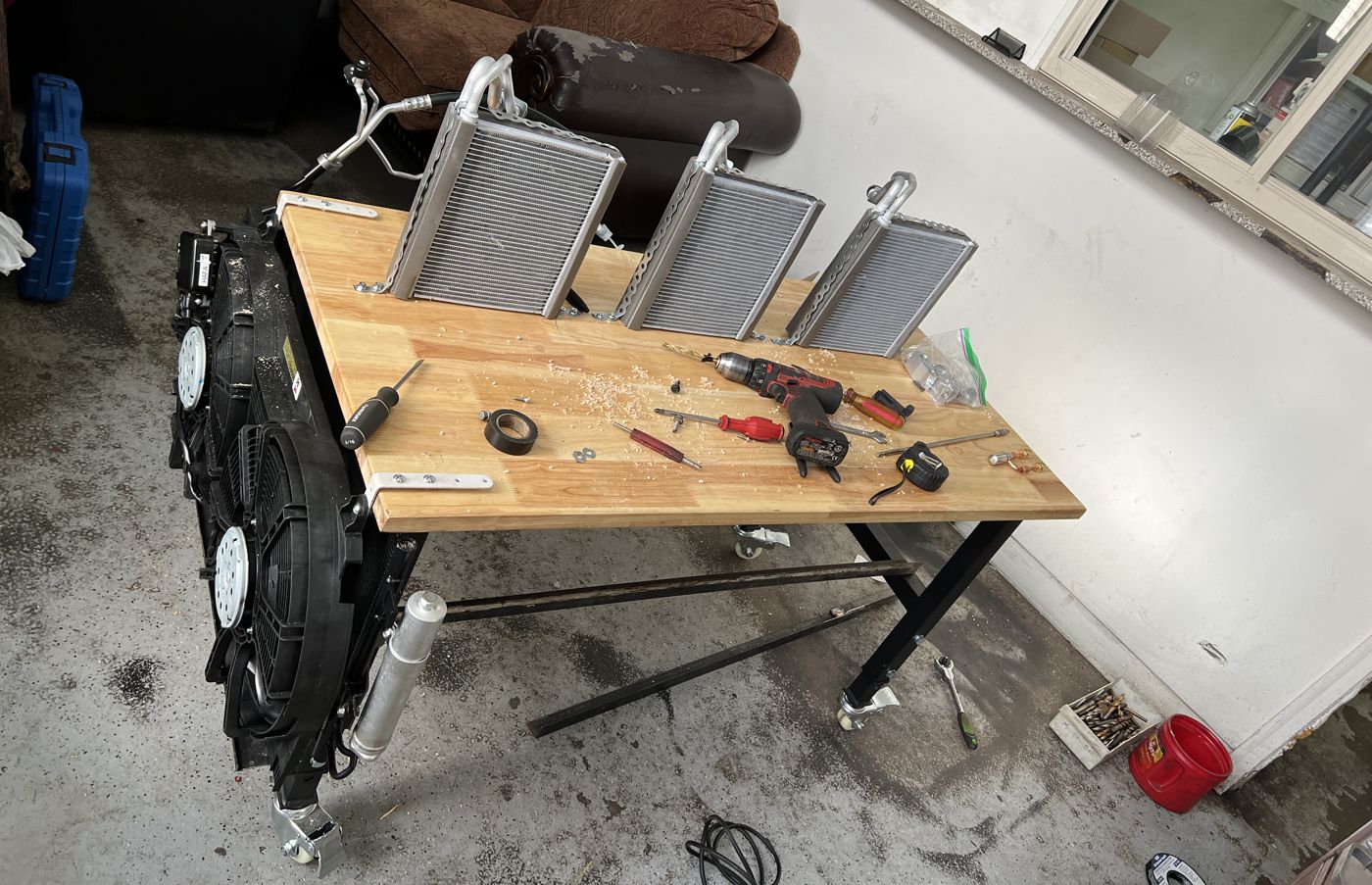
Real refrigerant needs real hands.
Equations don't braze copper or pull a vacuum. A local AC technician brazed the copper lines, pulled the vacuum and charged the system with refrigerant, with the practical habits of someone who works on real equipment every day.
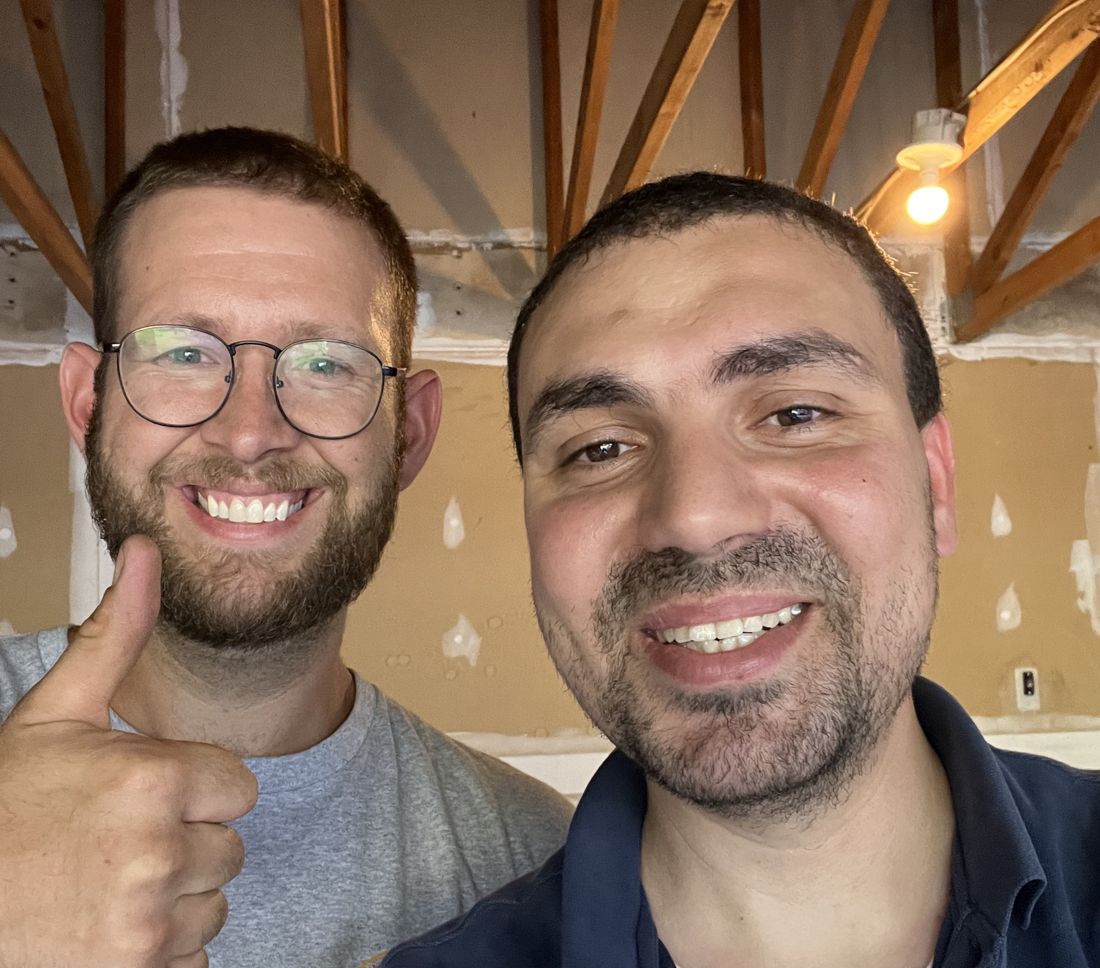
Most evenings ended with the same question: does it make sense to the person holding the wrench? It set a rule we still follow. Everything we design has to work for the people who install and service it, not only for the people who model it.
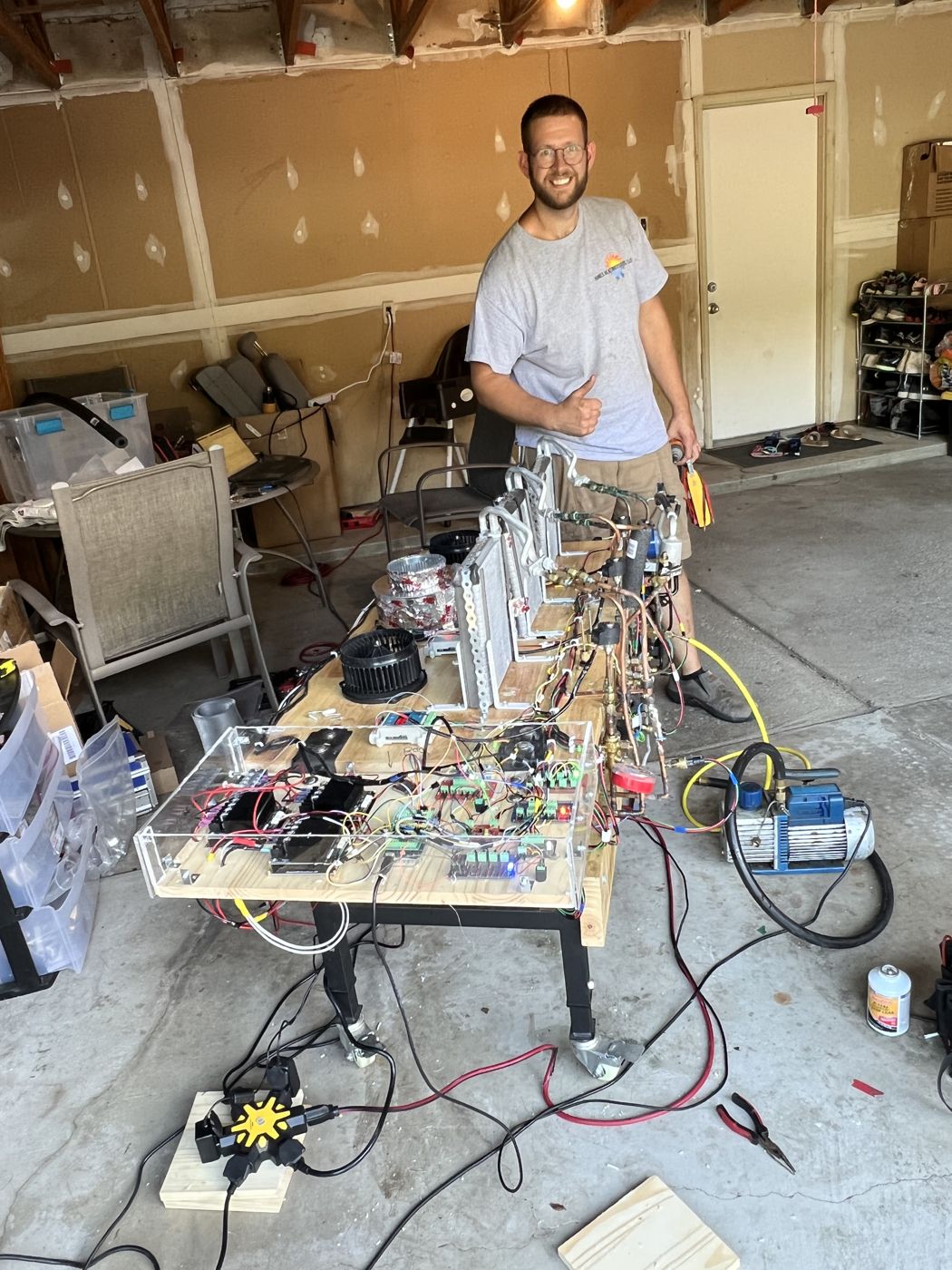
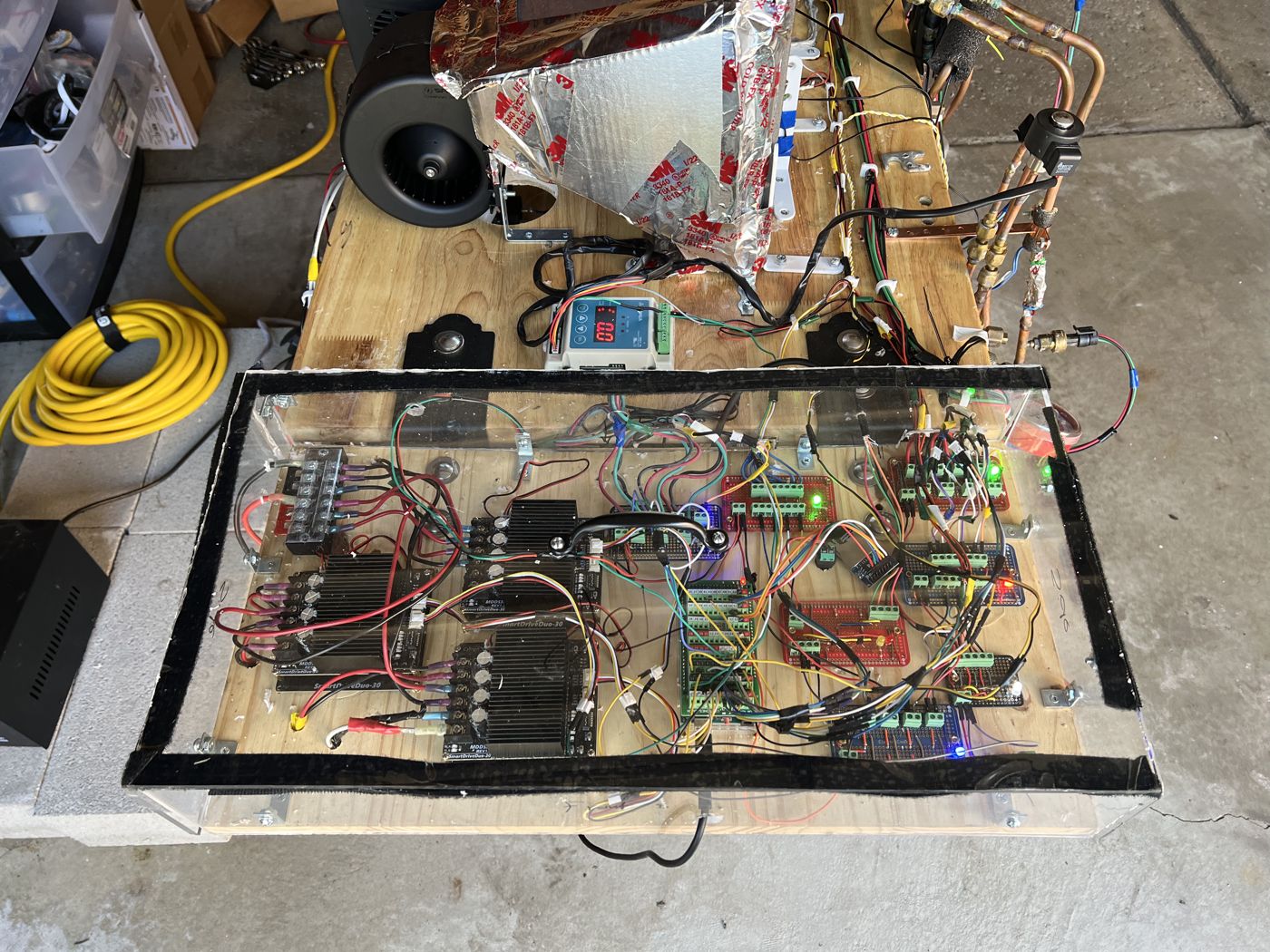
One clear box of wires.
While the refrigerant side came together, Ahmed designed the setup, instrumented it with sensors, wired the controller box by hand and wrote the code that ran it.
On this bench, our controller ran a vapor-compression system, setting its compressor, expansion valve and blower together. That work is the hardware test in our first patent application, published as US 2024/0295337 A1, with the results in FIGS. 4 to 7.
The bench grows up.
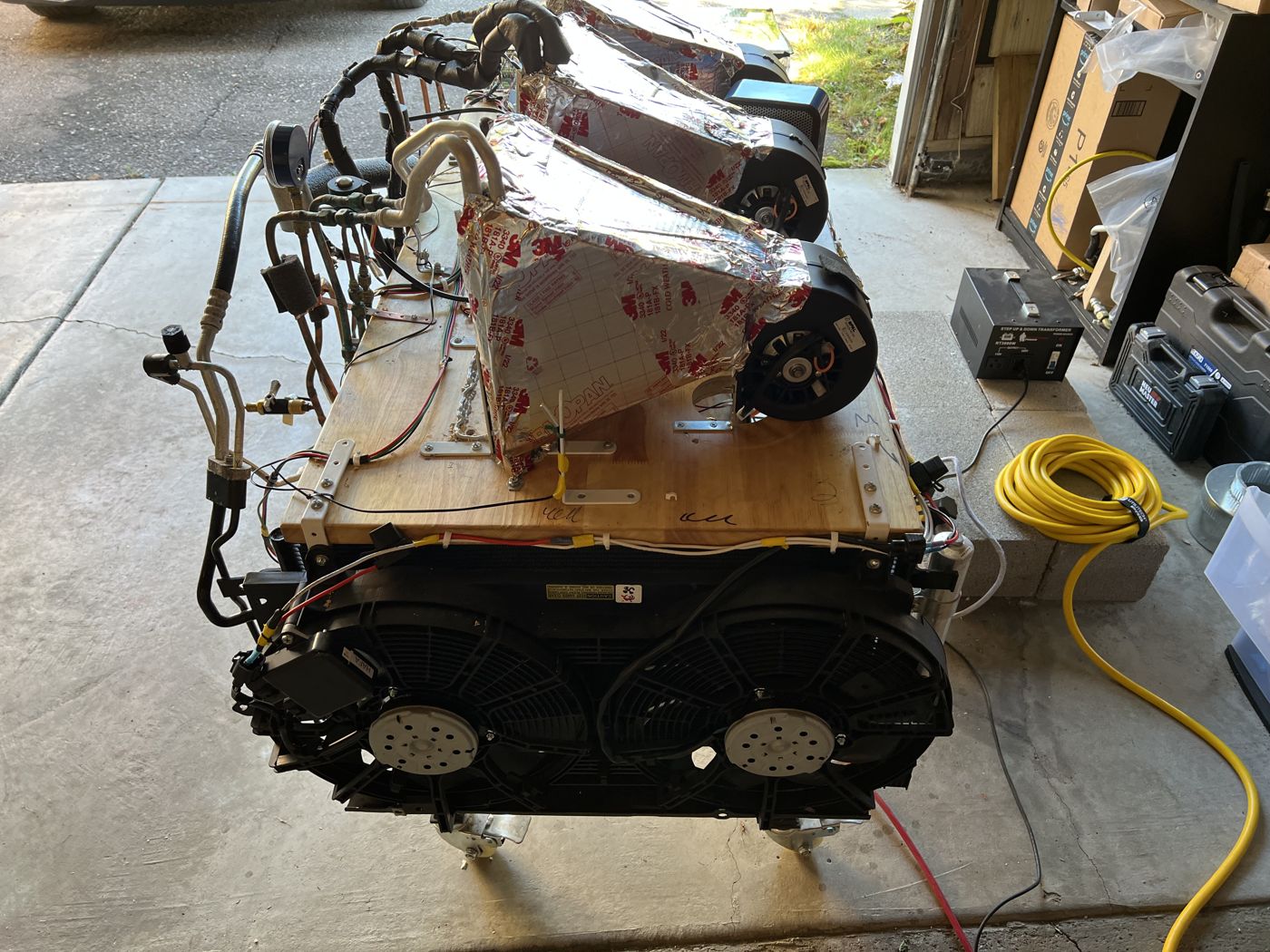
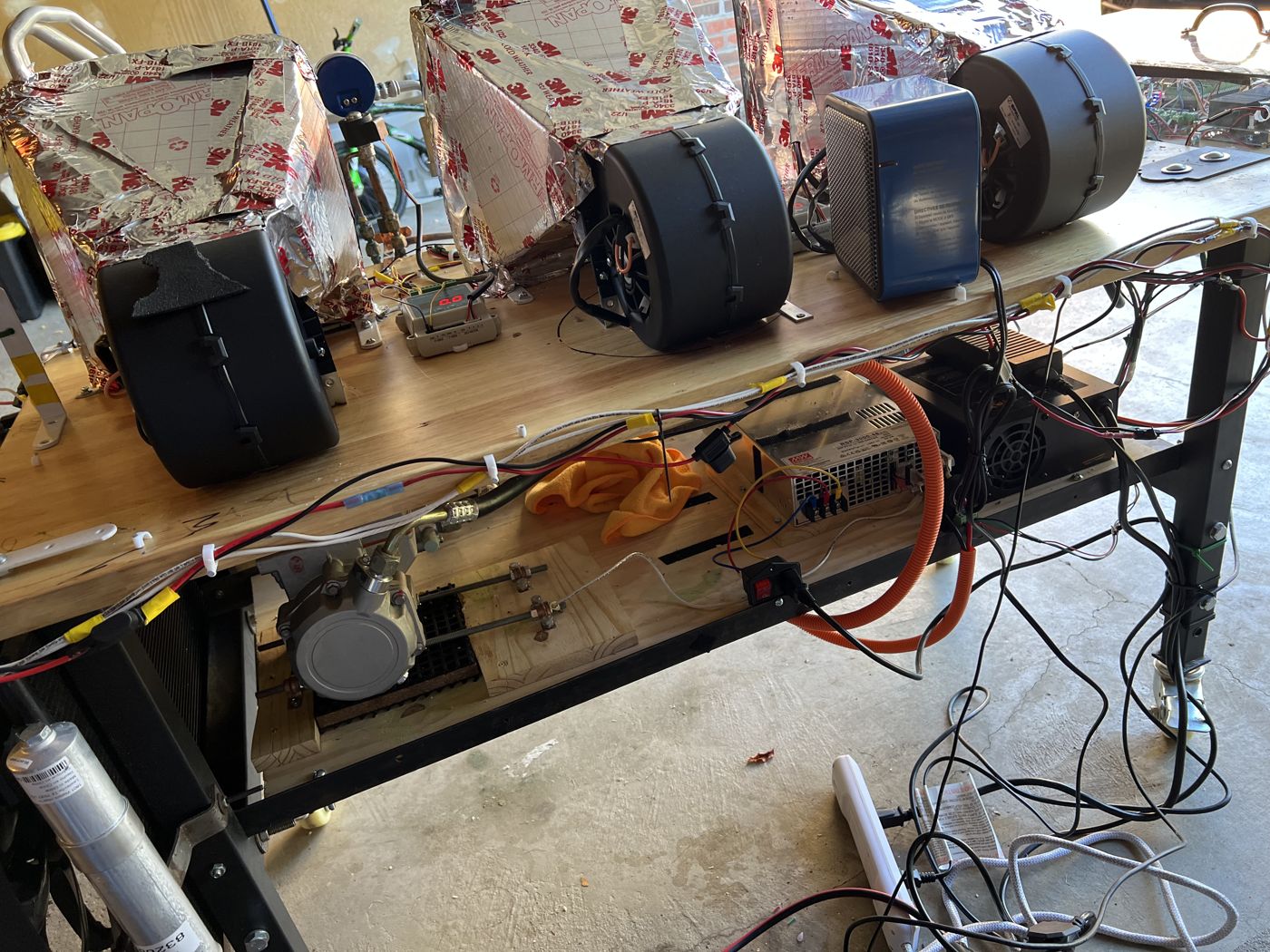
Then the bench was rebuilt and tidied: insulated blower ducts, the compressor mounted underneath, the condenser fans at the front and a proper power supply.
It is the same bench, just ready to run day after day instead of for an afternoon.
Problem 2 · Frost
Then winter showed us the bigger problem.
The more time we spent with heat pumps, the clearer it became that controls were only half the story. Since the 1940s, frost has stopped heat pumps in the cold, and owners keep gas or electric heat running beside them. A heat pump that can't be trusted in January rarely gets bought at all.
So AReCoS became a hardware company. We founded it and started designing an air–water heat exchanger to keep frost to a thin layer it clears while heating, with our controller built into the unit rather than in the cloud.
Same bench mindset, much bigger machines.
The garage is behind us, but the habits are not. We still start from the physics, still test on real hardware, and still ask what the technician on the roof will think.
If you own buildings, install equipment, build HVAC products or want to help us bring the first units to life, we would love to hear from you.
Let's talk.
Pilot sites for our heat pump RTU, manufacturing partners for our first builds, or our controller for your system.
Grand Rapids, Michigan 49546